
The Rise of WhatsApp as a Customer Engagement Powerhouse
If you’re a business owner trying to connect with customers faster and more effectively, WhatsApp is probably already part of your toolkit — or should be.
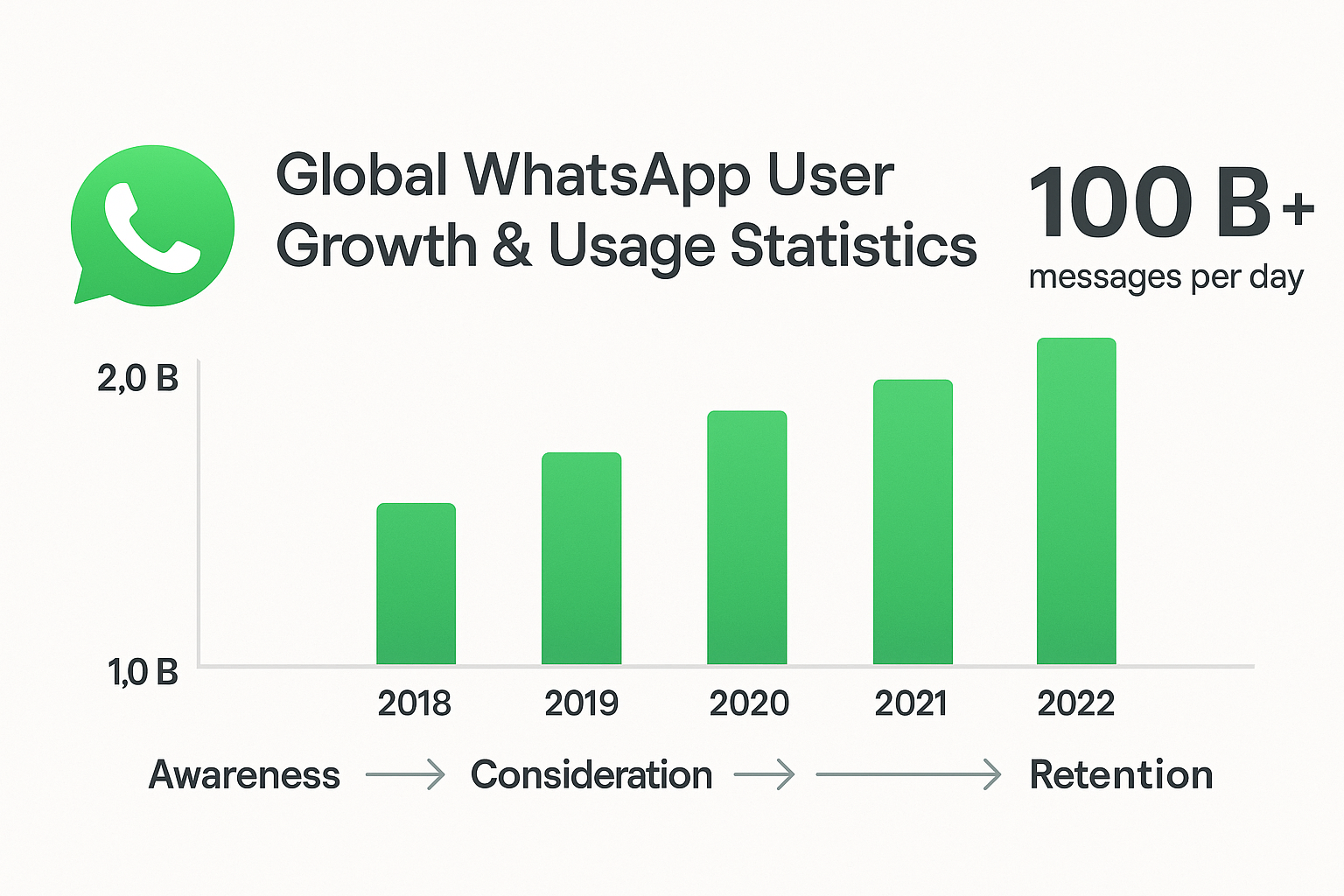
With over 2.7 billion active users worldwide, WhatsApp has evolved far beyond personal messaging. It’s now a serious business channel — enabling direct commerce, automated conversations, and personalized customer experiences.
Today’s customers want speed, simplicity, and human-like conversations. WhatsApp delivers all three in one platform. Whether it’s a quick order confirmation, real-time product query, or a personal follow-up message, this platform bridges the communication gap like no other.
Why Businesses Are Turning to WhatsApp for Commerce and Support
Here’s the reality — customers are tired of waiting in email queues and dealing with slow forms. They want instant replies. That’s where WhatsApp shines.
Every day, over 175 million people message a business on WhatsApp. The level of trust is unmatched — people feel more comfortable chatting with brands in a familiar, private environment than browsing a website or calling support.
For small and medium businesses, this is a massive opportunity. WhatsApp:
- Makes customer conversations personal and real-time.
- Reduces friction in the buying process.
- Allows direct engagement without relying on third-party platforms.
When you connect WhatsApp to your CRM, every chat becomes part of your customer journey. It’s no longer just a message — it’s a sales opportunity.
Understanding the End-to-End Customer Journey on WhatsApp
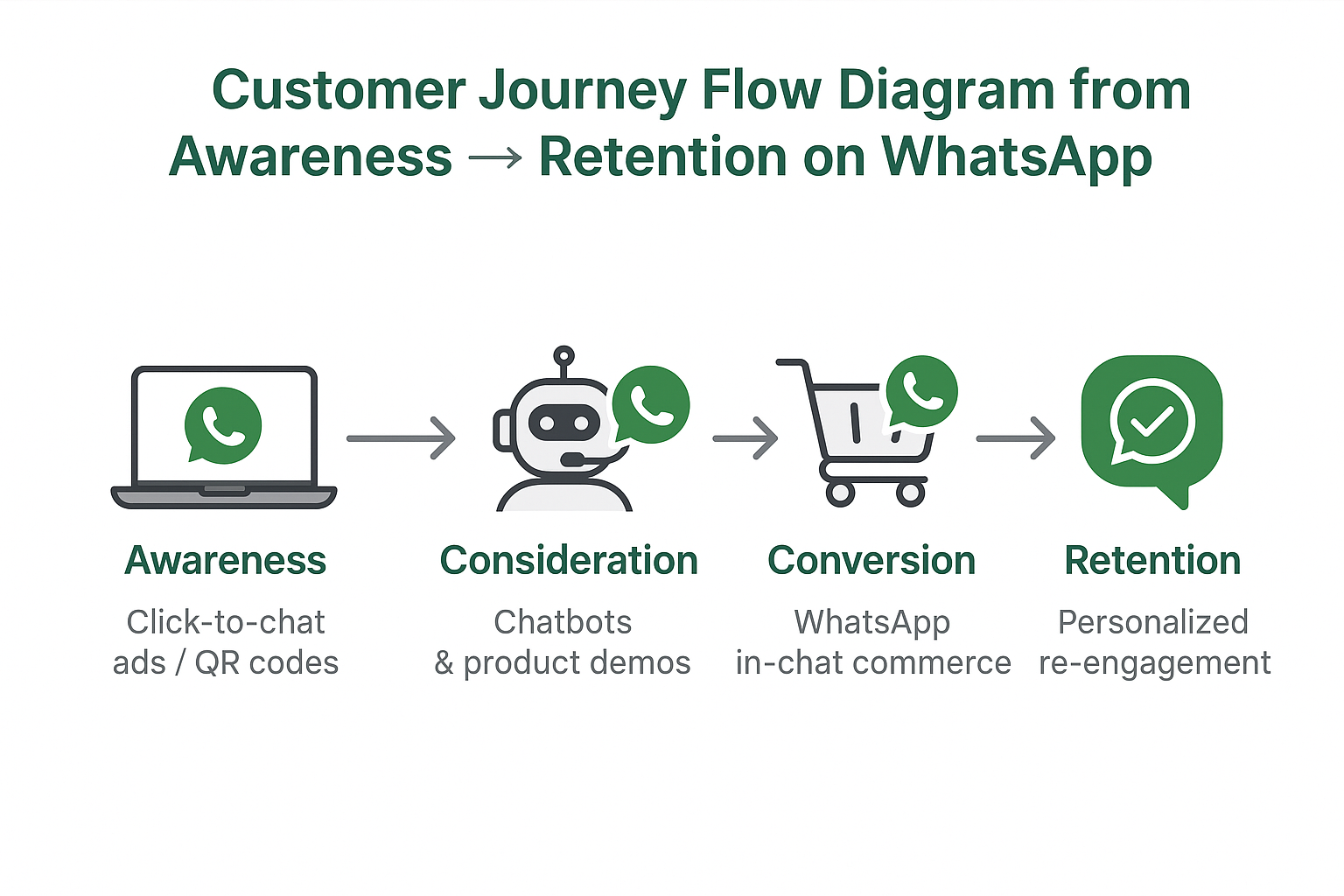
A true end-to-end customer experience doesn’t start or stop at the sale. It begins when someone discovers your brand and continues long after purchase. WhatsApp helps you cover every stage:
1. Awareness: Starting the Conversation
Use Click-to-WhatsApp ads or QR codes on your website, packaging, or social media. When someone clicks, they go straight into your chat.
👉 Example: A restaurant adds a WhatsApp QR code on takeaway boxes for instant reorders.
2. Consideration: Nurturing the Relationship
Here, chatbots can handle FAQs, share product catalogs, or send demo videos.
👉 Example: A real estate agent uses WhatsApp bots to send virtual tours automatically after inquiry.
3. Conversion: Seamless Buying
With WhatsApp Commerce and in-chat payments, customers can browse products, add to cart, and pay instantly.
👉 Example: A boutique store uses WhatsApp Pay to accept orders directly in chat.
4. Retention: Keeping Customers Engaged
Send personalized messages — order updates, birthday offers, or review requests. These small touches build loyalty.
👉 Example: A salon automates reminders for hair care packages every 30 days.
WhatsApp Commerce: Turning Chats into Conversions
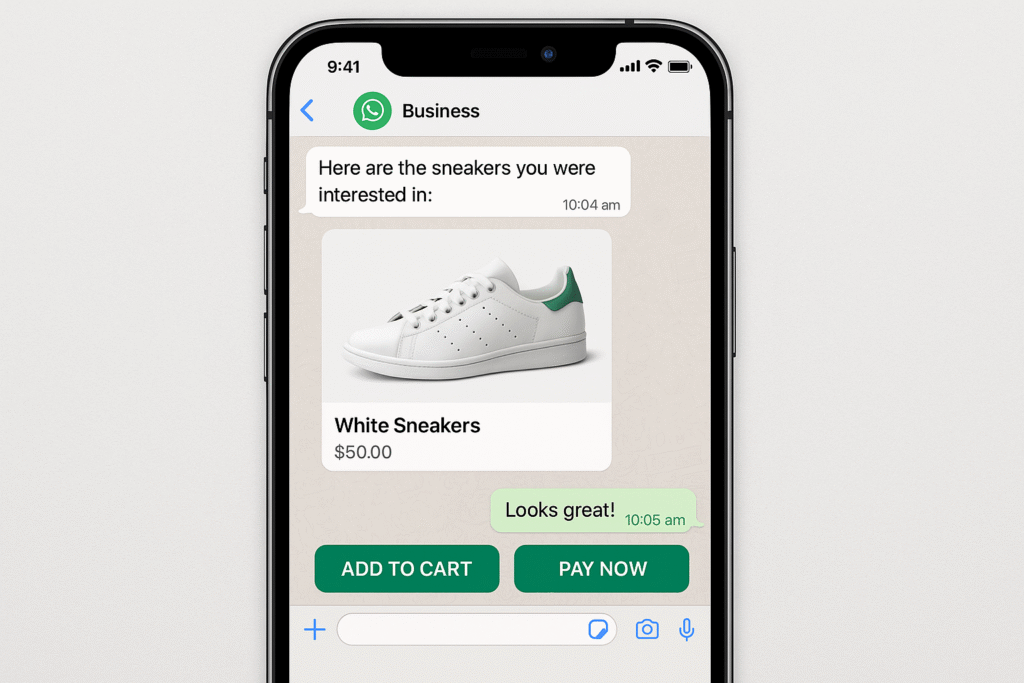
Think of WhatsApp as your new digital storefront. It’s like having an online shop that lives inside your customer’s phone.
With the WhatsApp Business API, you can:
- Showcase product catalogs.
- Send product photos, descriptions, and prices directly in chat.
- Offer one-click payment options.
When combined with chatbots, it becomes a 24/7 sales channel. Customers don’t need to download another app or open a browser — they can explore, ask, and buy within seconds.
CRM Integration: The Real Power Behind WhatsApp
Integration is where the magic happens.
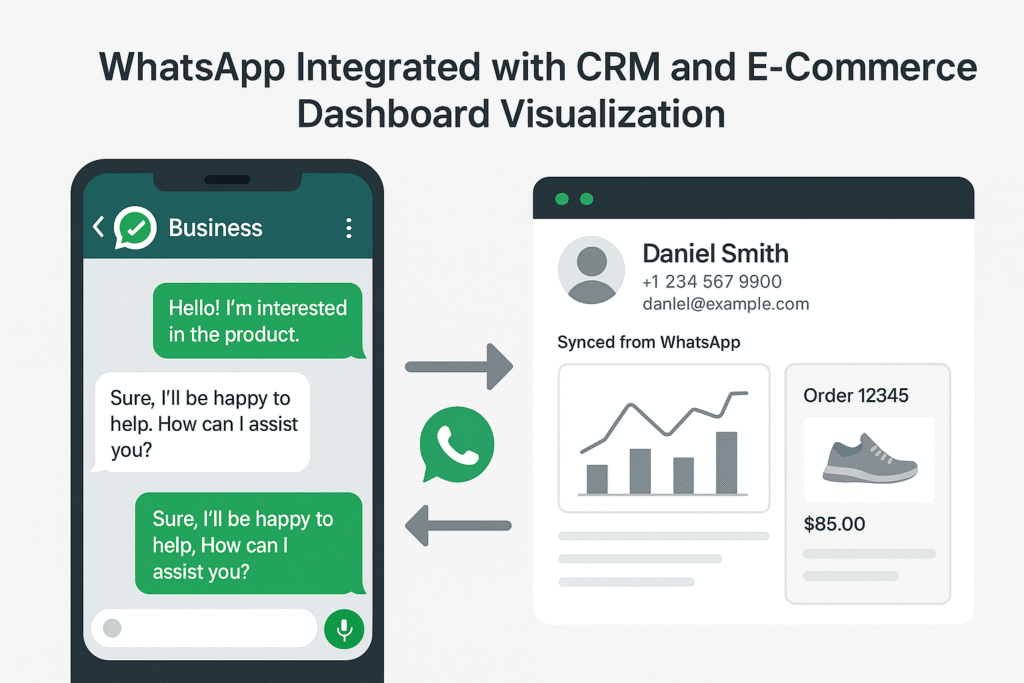
By connecting WhatsApp to your CRM or e-commerce platform, you can manage leads, orders, and analytics in one place.
Imagine this: a customer messages you on WhatsApp, their details automatically sync into your CRM, and your marketing automation tool follows up with a discount or thank-you message.
This is not just communication — it’s data-driven personalization at scale.
At Raj Digitech Services, we help businesses integrate WhatsApp with CRM tools like HubSpot, Zoho, and Salesforce to streamline workflows and boost ROI.
Powering Conversations with AI Chatbots on WhatsApp
Chatbots are no longer just for answering FAQs — they are your virtual sales and support assistants.
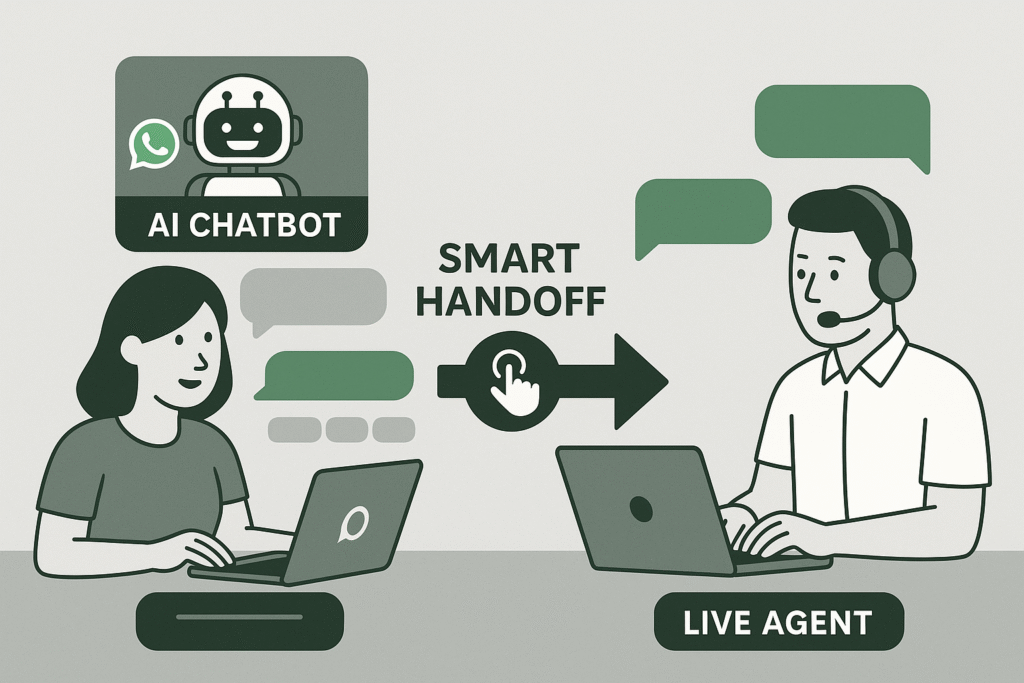
An AI-powered WhatsApp bot can:
- Qualify leads automatically.
- Share tailored recommendations based on past behavior.
- Transfer chats to human agents when needed.
This hybrid approach — AI + Human — ensures customers never feel ignored while your team saves time.
👉 Example: A travel agency chatbot can share flight options, confirm bookings, and then transfer to an agent for complex itinerary planning.
Personalisation: The Heart of WhatsApp Marketing
WhatsApp offers an unmatched level of personalization — far beyond generic marketing messages.
You can use:
- Behavior-based triggers to send relevant updates (like restock alerts).
- Dynamic message templates that address customers by name.
- Segmentation to send different content to different audiences.
These personalized interactions make customers feel valued and understood — leading to stronger brand relationships and repeat sales.
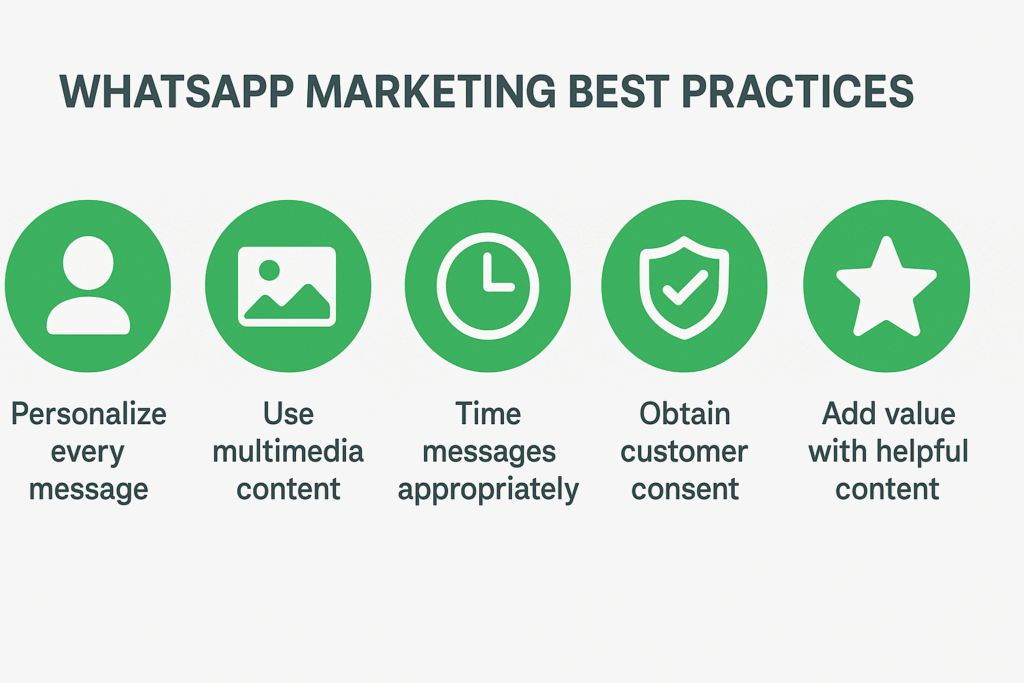
Best Practices for WhatsApp Marketing
Let’s make your WhatsApp marketing more effective with these golden rules:
1️⃣ Personalize Every Message — use the customer’s name, purchase history, and preferences.
2️⃣ Use Multimedia — images, videos, and GIFs make your chats engaging.
3️⃣ Time It Right — avoid late-night messages; respect local time zones.
4️⃣ Ask for Consent — only message those who opt in.
5️⃣ Add Value — offer tips, updates, or discounts instead of constant promotions.
Follow these, and your brand will stand out for professionalism and care.
Challenges and Compliance: What to Watch For
WhatsApp has strict business communication policies. Make sure you:
- Use approved message templates for outbound communication.
- Respect user consent and privacy laws (like GDPR).
- Train your team on WhatsApp etiquette and quick-response tone.
The goal is to make WhatsApp a friendly, value-driven space — not another spam channel.
The Future of WhatsApp-Driven Customer Journeys
The future is conversational.
With Meta introducing AI assistants, AR shopping experiences, and voice-based commerce, WhatsApp will soon become your all-in-one business hub.
As AI and analytics improve, brands that embrace WhatsApp automation + personalization early will dominate customer engagement in the coming decade.
FAQs
Can WhatsApp replace email marketing?
Not entirely. It’s faster and more personal but works best alongside email.
What’s the cost of using WhatsApp Business API?
Pricing depends on usage volume and message categories. Raj Digitech can help you set up affordable plans.
Are chatbots difficult to implement?
Not at all. With the right platform and setup, your bot can be live within days.
Can I sell directly through WhatsApp?
Yes! Use WhatsApp catalogues, in-chat payments, and links to your online store.
How can I personalize WhatsApp campaigns?
Segment customers and use automated messages triggered by behavior or time.
Is WhatsApp marketing suitable for small businesses?
Absolutely. It’s cost-effective and provides a personal touch that customers love.
Conclusion
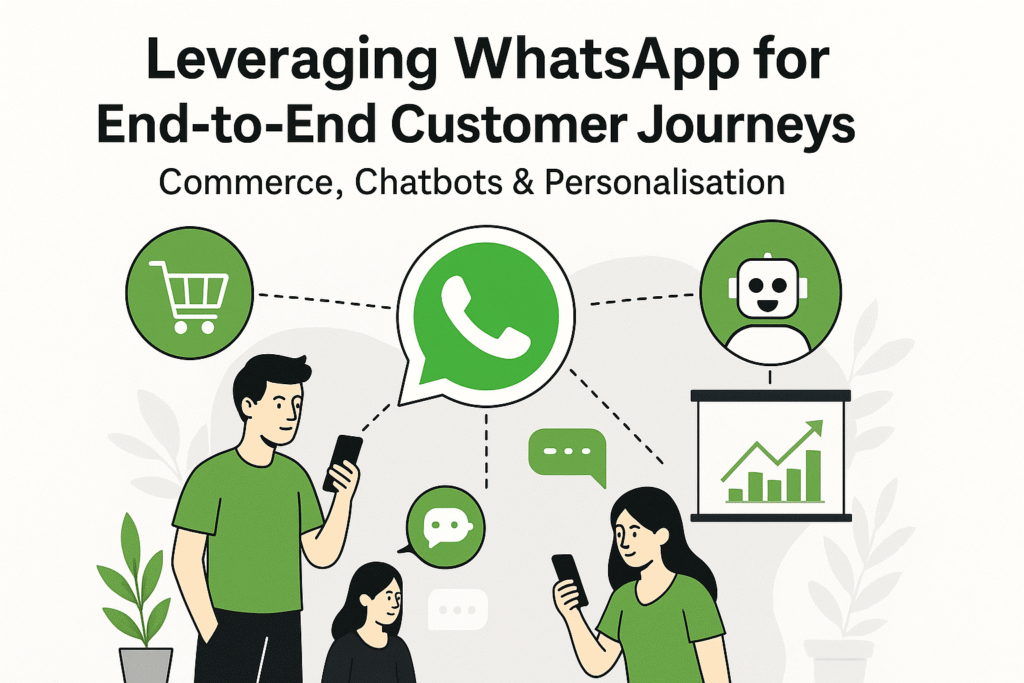
Leveraging WhatsApp for end-to-end customer journeys is one of the smartest moves a modern business can make.
From commerce to chatbots to personalisation, it allows you to build human connections — at digital speed.
At Raj Digitech Services, we help businesses like yours design seamless WhatsApp strategies that engage customers, drive conversions, and nurture loyalty.
Start the conversation today — because your customers already are.